




Description
Every tube contains 20 seed balls, each packed with wildlife-friendly wildflower seeds (see below for plant details). These make for lovely gardening gifts, bee gifts or eco friendly stocking fillers, and will work well in window boxes, balcony pots, garden beds and wildlife gardens.
One tube of seed balls will cover 1 square metre in a garden bed or 3-5 medium sized pots (leave at least 10cm between each ball). Best scattered in Spring or Autumn.
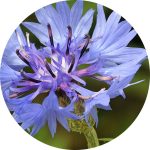
Annual.
Height: 90cm
Flowers: June to August
Cornflowers are edible. They have a cucumber-like taste. Flowers can be consumed in the form of salad and tea, or used as a garnish.
A bright red flowering annual – hugely popular and often used as a symbol of remembrance.
Height: 30-60cm.
Flowers: May to July
The remembrance poppy is the common field poppy, one of the first wildflowers to colonise disturbed ground or fallow cornfields. It became identified with the battle zones of the First World War, or Flanders Fields, which were originally corn fields.
Oxeye Daisy (Leucanthemum vulgare)
Perennial.
Height: 30-90cm
Flowers: May to September
In Austria and Germany oxeye daisies were hung inside the house as it was believed they would repel lightning.
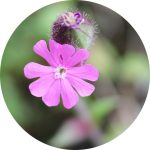
A perennial with rose pink petals.
Height: 20-60cm
Flowers: March to November
Silenus the merry god of the woodlands in Greek mythology, gave his name to Silene dioica. The second part of its scientific name, dioica, means ‘two houses’, and refers to the fact that each Red Campion plant has flowers of one sex only, so that two plants are needed to make seeds.
Forget-me-not (Myosotis arvensis)
Short annual with blue-grey flowers occasionally interspersed with pink flowers.
Height: 10-40cm
Flowers: April to October
Forget me nots have been used in the past for their astringent properties. The name Myosotis is derivation of the Latin and Greek for mouse and ears.
What are Seedballs? How do they work?
What is a Seedball?
A ball made from seeds, clay, peat-free compost and chili powder.
Why use Seedballs?
The ball prevents the seeds from being a tasty lunch for birds and insects, thereby increasing the chances of your flowers growing. Plus they’re super easy to use, no digging and no expert knowledge needed!
How do I use Seedballs?
Throw onto soil or compost in a garden bed or planter in Spring or Autumn, leaving at least 10cm between each ball. Your Seedball has everything it needs to grow and, once the ball becomes moist and the temperature is right, your seeds will germinate!
What area will my Seedballs cover?
We would usually advise 20 seed balls per square metre, or 3-5 seed balls for a 35cm container.
Conservation
All seed is responsibly sourced in the UK from Flora Locale accredited suppliers, we only ever use peat-free compost and our steel tins are manufactured in London (with the help of a solar farm on the factory roof).




There are no reviews yet.